Your AI Hired a Fern. You Approved It.
By Matthew Andrews ·
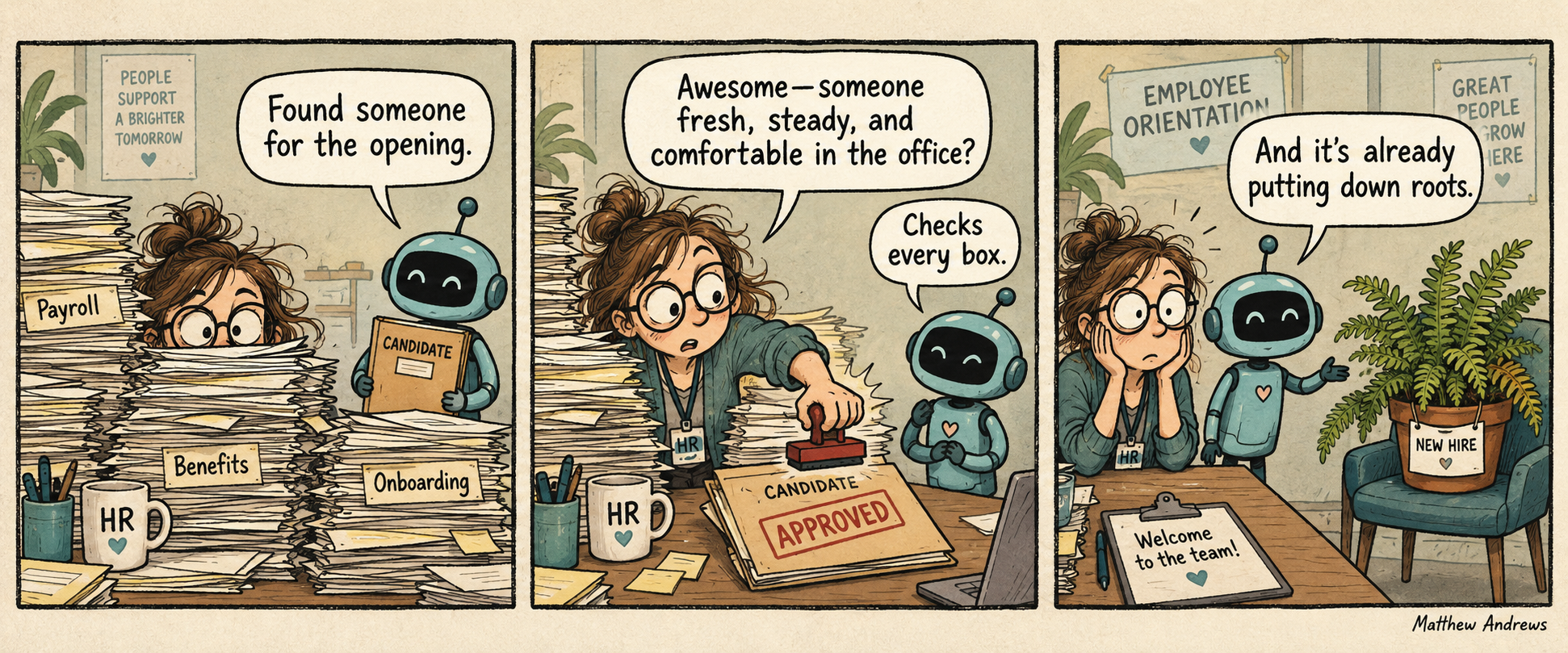
The AI checked every box. HR stamped “approved.” Nobody opened the folder.
Workflow Automation That Earns Trust · Part 3
The comic is absurd, but the question behind it is practical: when we put a human in the loop, are we giving them the time and context to exercise judgment—or just another thing to approve?
A report can be complete without being approved. An automation can prepare a decision without having authority to make it.
That distinction matters when we decide which parts of a workflow to automate. My reporting-automation work focused on reducing the effort of producing material for review and approval. Producing the material and approving it were separate responsibilities.
Yesterday’s article asked what happens when a process departs from the plan. Today’s question applies even when everything goes as expected: which decisions still belong to a person?
Name the Decision Before Adding the Button
Consider a hypothetical reporting workflow. The system gathers updates, checks required fields, and prepares a report. A manager must then decide whether that report is ready to be released.
A requirement that says ‘add human review’ leaves too much unresolved. What is the person deciding? What evidence will they see? Can they return the report for correction? What happens if they do nothing?
I would define the decision explicitly: an authorized reviewer decides whether this version is suitable for release, with the source information and unresolved issues visible. That gives the approval step a purpose the team can demonstrate.
Give the Reviewer Something They Can Judge
Human involvement adds little if the person sees only a polished result and an Approve button. They need enough context to understand what they are accepting.
In this example, that means showing the reporting period, source information, outstanding concerns, and any changes since the previous review. The reviewer should be able to approve, return it for correction, or hold it while a question is resolved.
The aim is to reduce the work of gathering evidence while preserving the judgment the decision requires. A person who must reconstruct the entire process before deciding has not received a useful handoff.
Approval Belongs to a Specific Version
If the report changes after approval, should the earlier approval still authorize release? That rule needs an answer before implementation.
For this hypothetical workflow, a substantive change would return the report to review. The system would retain who approved which version and prevent the changed report from inheriting permission it never received.
The team can test that requirement directly: approve a report, change its content, and attempt to release it. The result should match the agreed rule rather than depend on someone remembering to check.
Waiting Is a State the Workflow Must Support
No response should not silently become approval. When the reviewer is unavailable, the workflow needs a visible pending state and an agreed route for escalation or reassignment.
A deadline can trigger a reminder. It should not grant authority that the process never assigned. If a class of decisions is suitable for automatic handling, define that permission and its limits separately.
Before building a human decision point, I would ask five questions: What is being decided? Who has authority? What evidence do they need? Which version does their decision cover? What happens while they have not decided?
Make the Boundary Observable
A useful acceptance requirement could read: ‘The reviewer can inspect the prepared report and its unresolved issues, approve a specific version, or return it for correction. Only an approved version can be released.’
That statement gives developers and coding agents a clear outcome without prescribing every implementation detail. It also gives the team a practical demonstration: preparation succeeds, release waits, an authorized decision is recorded, and only the approved version proceeds.
The value of automation is not measured by how completely people disappear from a process. I want it to remove avoidable preparation work and make the decisions that remain easier to understand, carry out, and trace.
Subscribe for Future Posts
Follow my writing on technology, leadership, and building better systems. Add the blog’s RSS feed to your preferred feed reader to receive future posts.
Was This Post Useful?
Loading reader feedback…
Public totals. An anonymous browser identifier remembers your vote; no account is required.